I feel like I live on a prairie. I do live on a prairie, but I feel like it too. The bright sun, waving green grasses, tall wildflowers dancing in the wind.
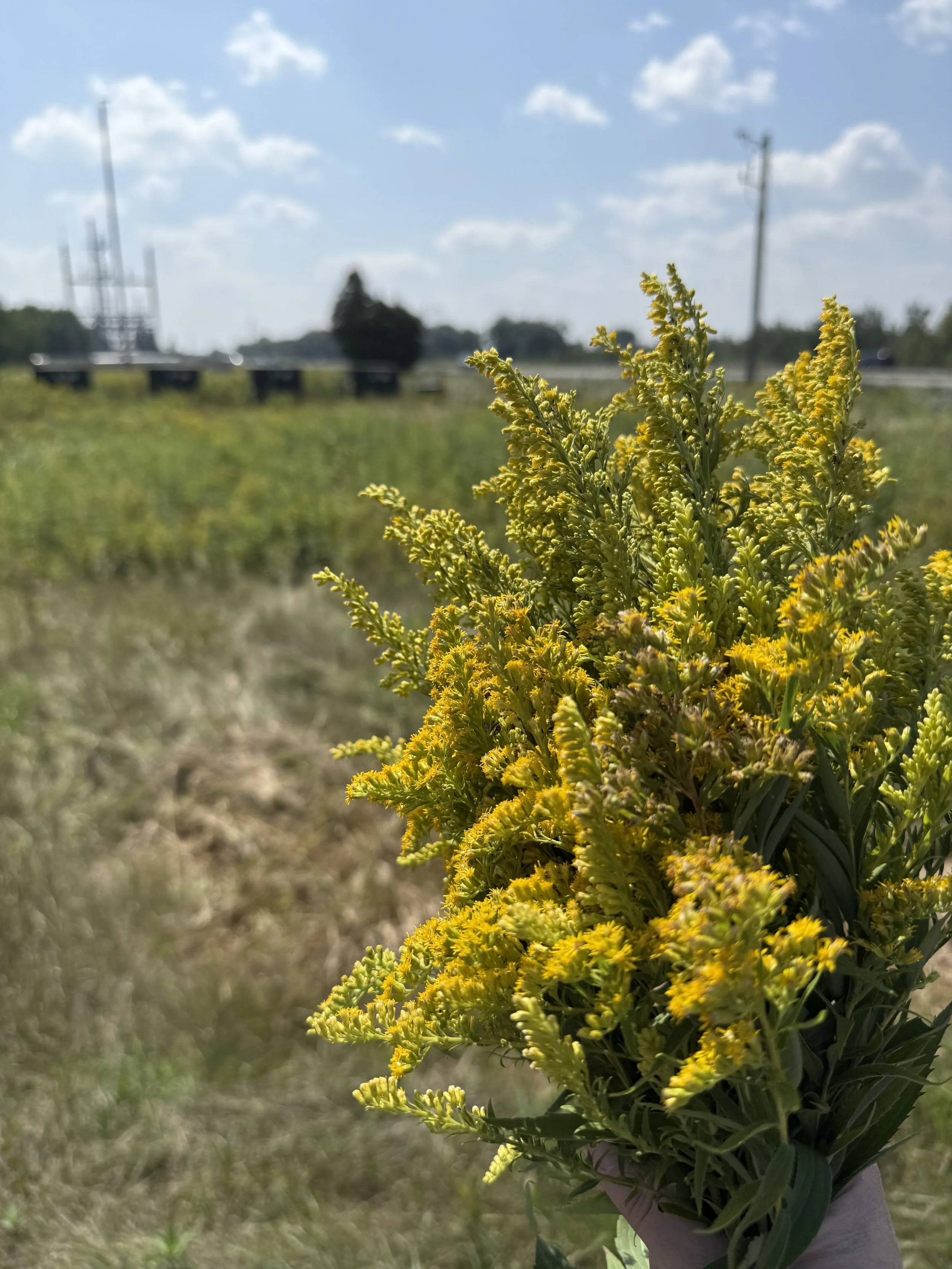
Foraging goldenrod beside HWY 15
I never thought of myself as a prairie girl. I’ve always been more attracted to the deep forest, the smell of the earth, trees towering above me with light dappling through their leaves. As I explore my new home state, I am learning the names of the flora and fauna that surround me, a whole new ecosystem to explore with my new copy of Trees of Minnesota in my pocket.
At Sheep & Wool Camp a few weeks ago, connection to the land we live on was a theme that ran through the entire week. During our instruction in natural dyeing, I learned that goldenrod is a dye plant native to the prairie and they are currently in season. As soon as I started looking for it, I saw it everywhere, in fields, ditches on the side of the road, even in my own backyard.
Goldenrod grows wild throughout the northeast and midwest and up into Canada. When used in textile dying, it produces a vivid yellow or yellow-green color. As I was driving to visit a friend in Little Falls, I saw it growing everywhere on the side of the road. Just before I passed mile marker 151, I saw a turn off next to a huge field of goldenrod. I knew I was going to stop on my way back.
Natural dyeing is popular with many in the fiber arts world, but since most dyers want to grow the plants they dye with, it is a slow process. Foraging for plants is another option, if you know what to look for.
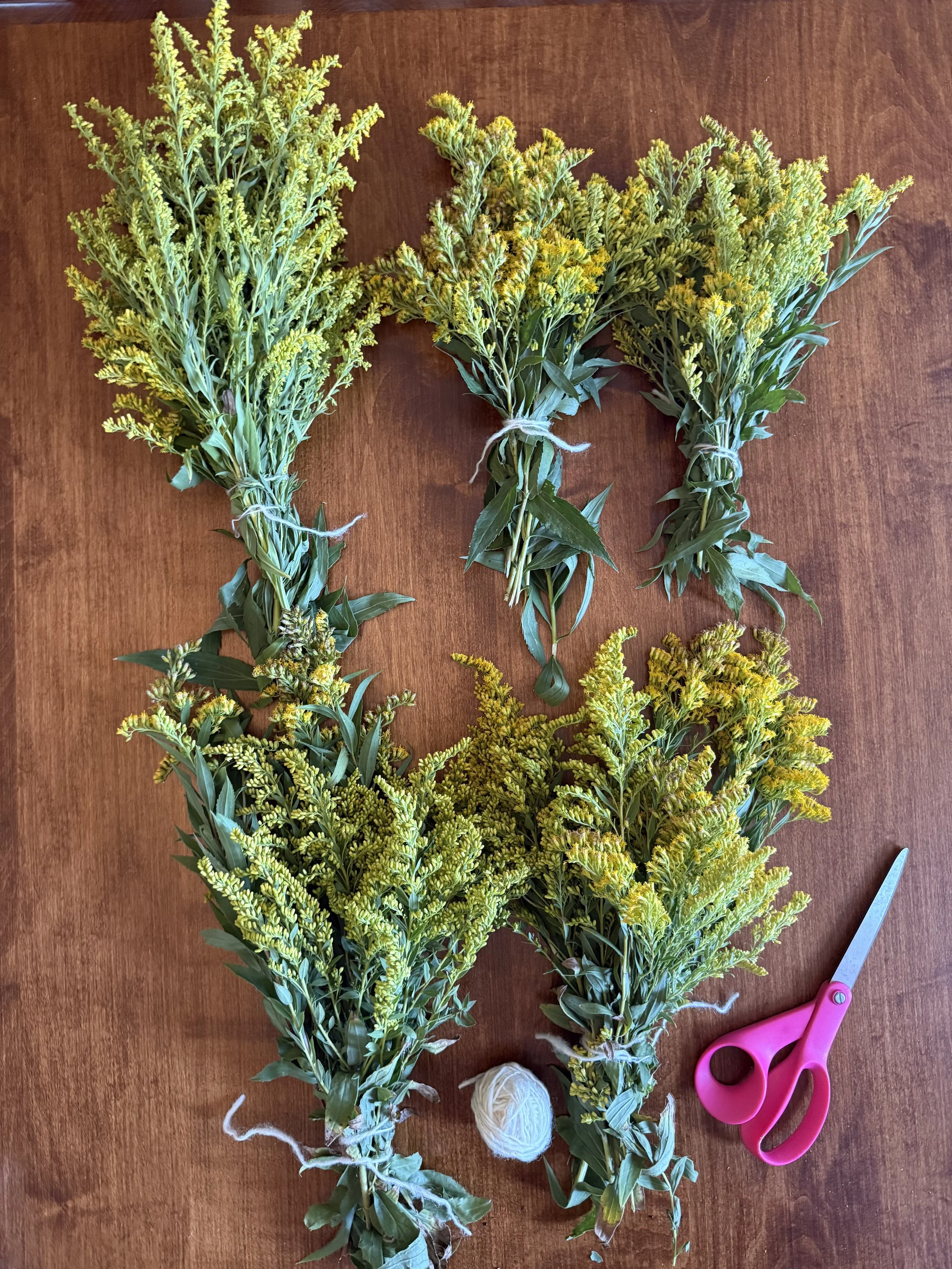
Bundled for Drying
I hung the goldenrod plants in bundles to dry them until I’m ready to use them. Dyeing can be done with fresh or dried plants.
Once you have the plants, the dyeing process is easy to learn, but the many steps and time involved is often a barrier in today’s impatient world. For me, it has been a chance to slow down and appreciate each step along the way.
“Everybody knows you can buy colored yarn and don’t have to make it yourself. But to a dyer, that is beside the point.”
First, I mordant the wool with alum to prepare it to take the dye. Mordant (from the Latin mordere, to bite) helps the dye bond to the fibers, preventing it from washing out. Next, I prepare a dye bath by simmering the plants in water for an hour or so. This moves the pigment from the plants into the water.
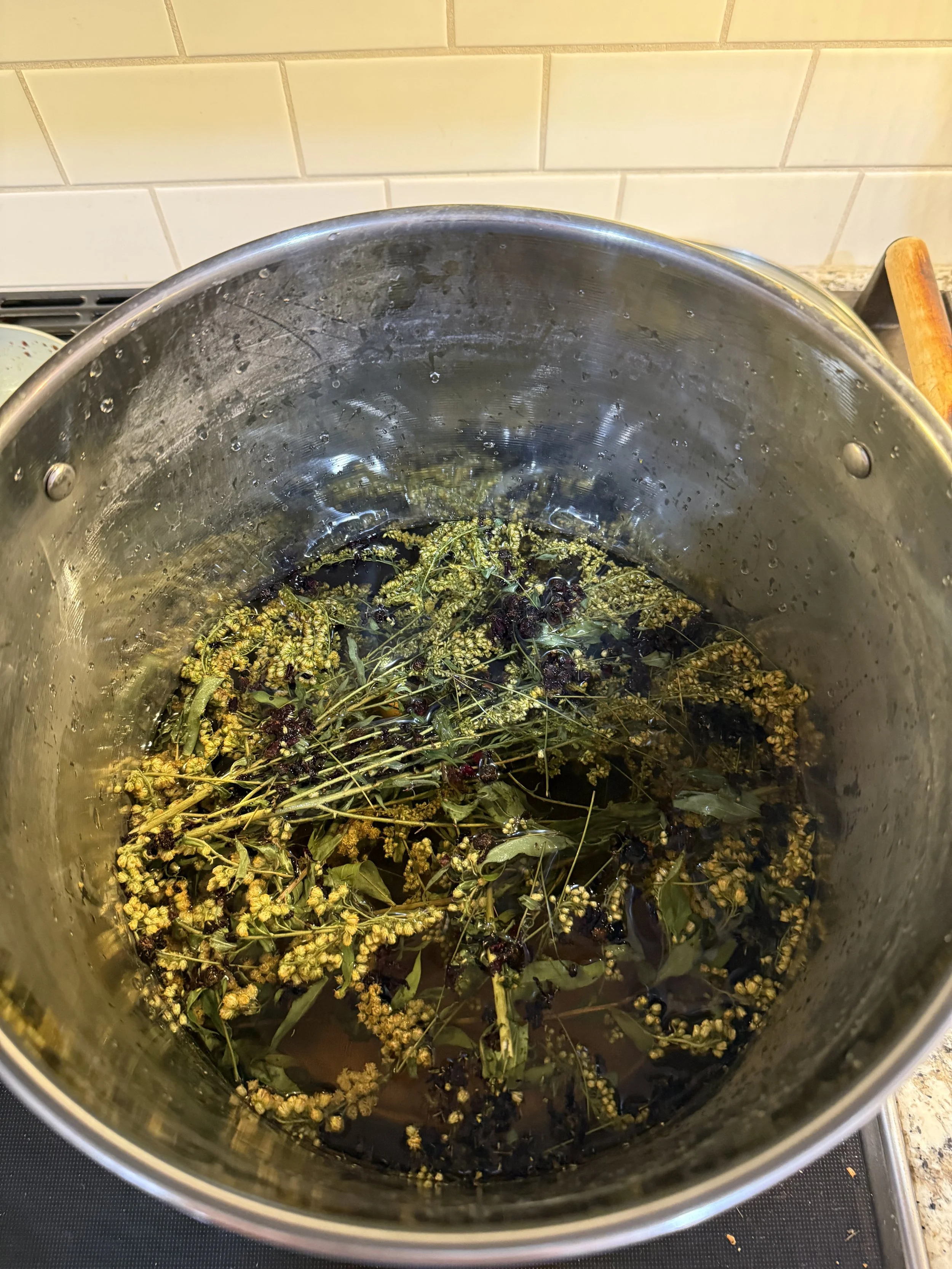
Preparing the dye bath
I prepare a dye bath by simmering the plants in water for an hour or so. This moves the pigment from the plants into the water.
After straining out as much plant matter as I can, I add the wool. It also simmers for an hour or so, and then cools for several hours (often overnight). After that, I rinse it and hang it to dry.
My favorite part of natural dyeing is that it makes me feel like a backwoods witch—foraging, hanging plants to dry, simmering large pots of herbal concoctions. Maybe I should start saying prairie witch?
Natural dyeing also tends to produce beautiful soft colors, which I love. See my story about Sheep and Wool Camp for a picture of the range of colors that can be achieved with natural dying.
It’s also very witchy to create something out of raw natural materials. Every step feels like magic, pulling color from plants, spinning the wool into yarn, knitting it into something useful.
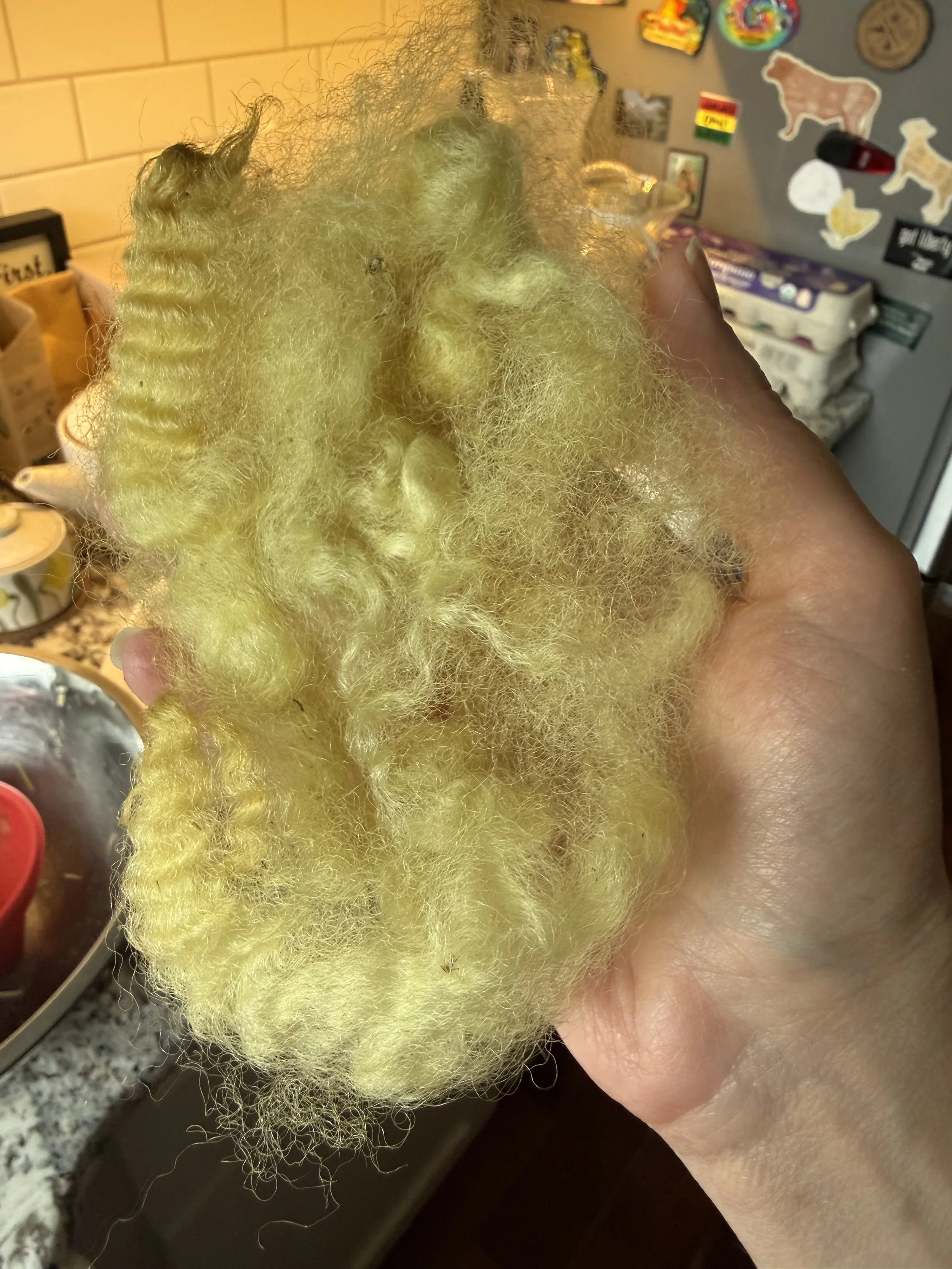
Finished Product
Or is it? At this stage the wool is ready to be processed for spinning. That’s right, there are several more steps before I even begin knitting!
I can’t wait to see the yarn this dyed-in-the-wool experiment produces. The yellow-greenish hue seems a little radioactive to me. I have read that adding iron can shift the color to a sage green, so that will be my next experiment in natural dyeing.